


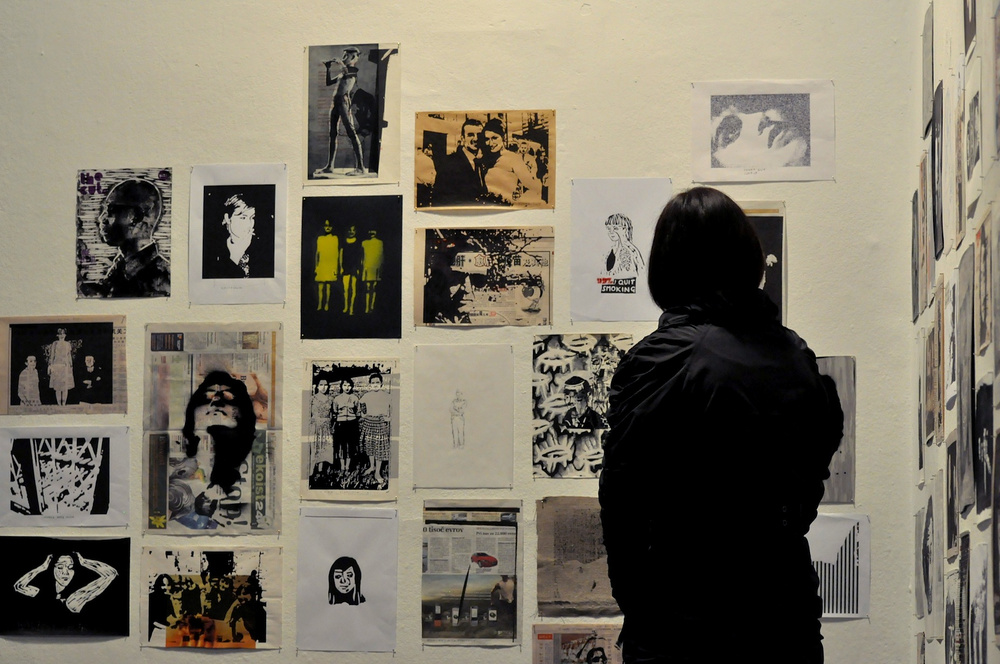
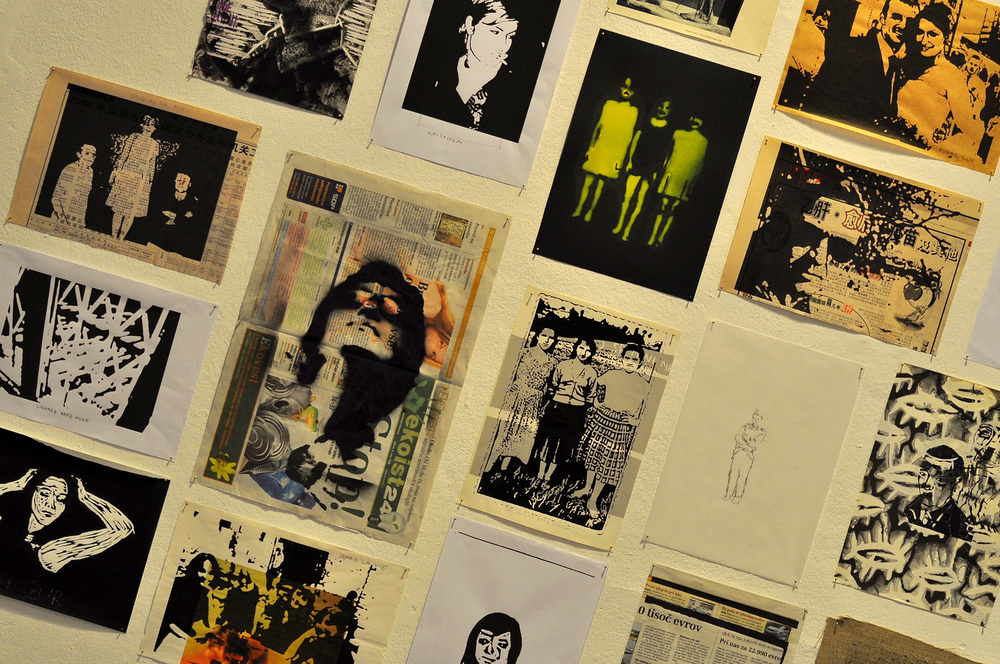
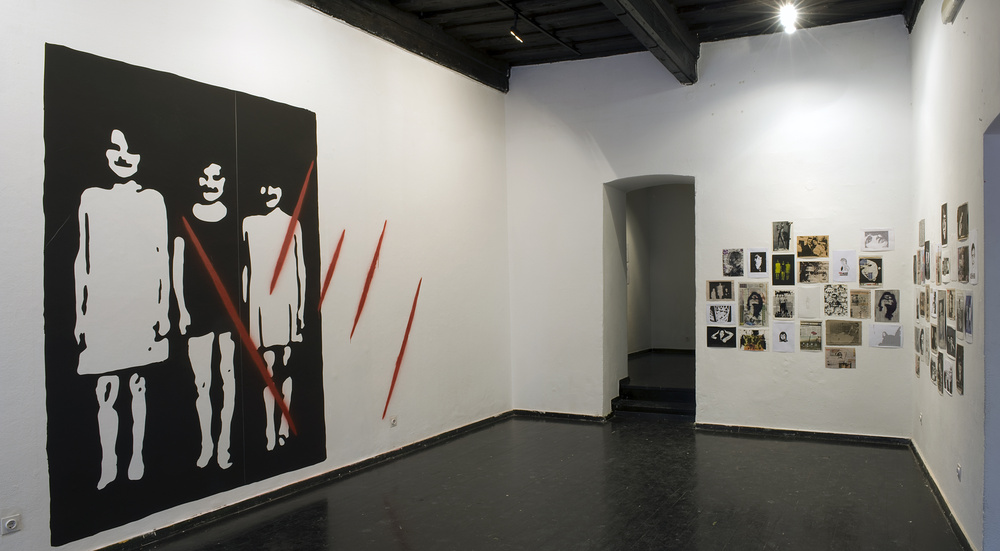
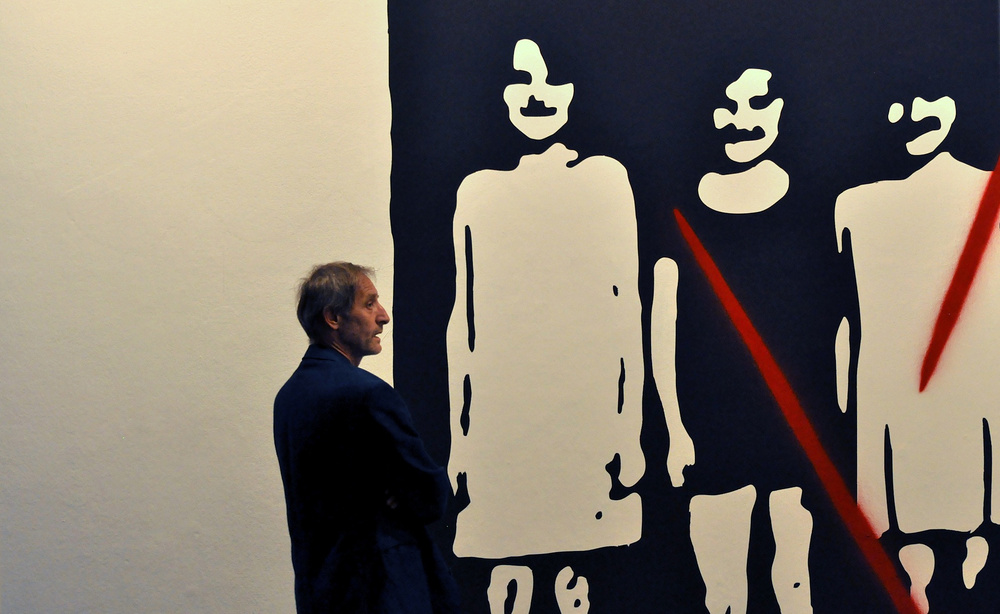
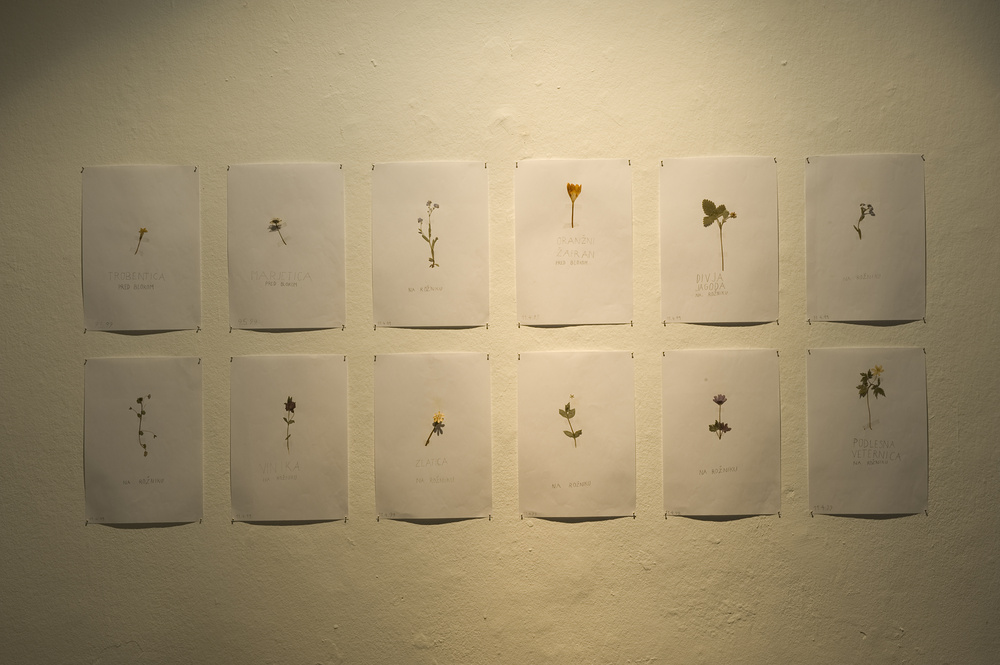
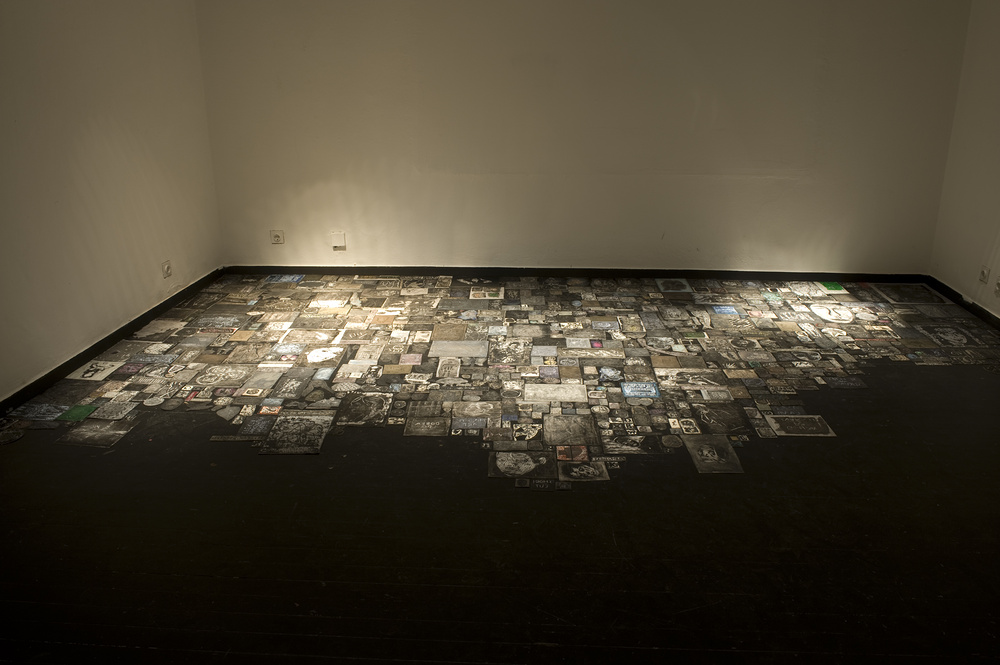
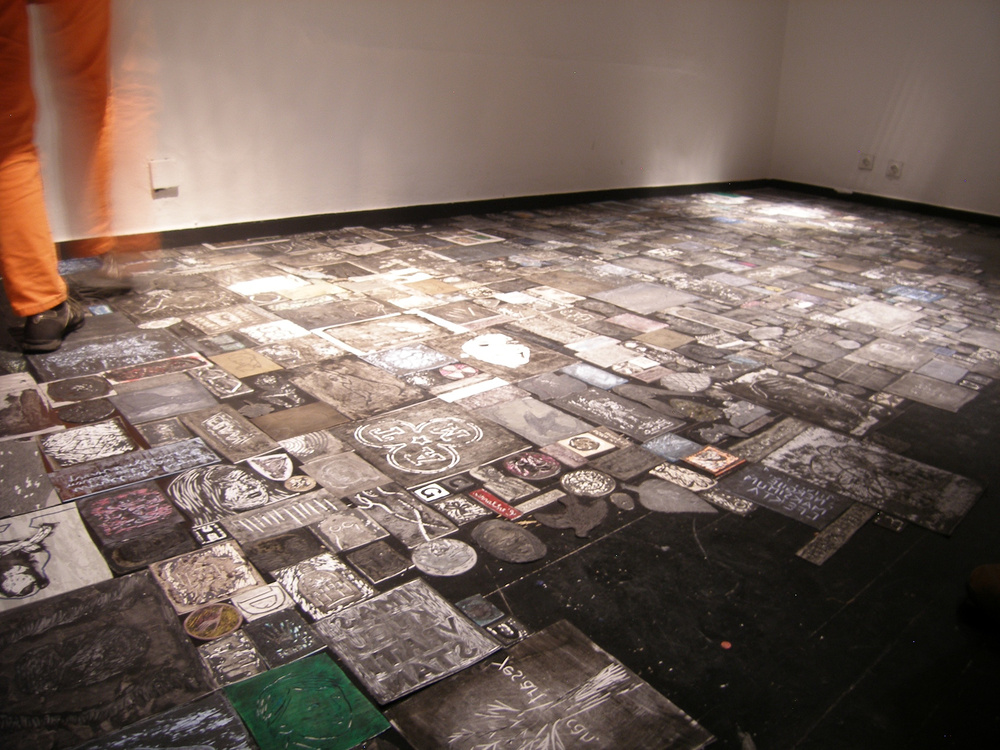
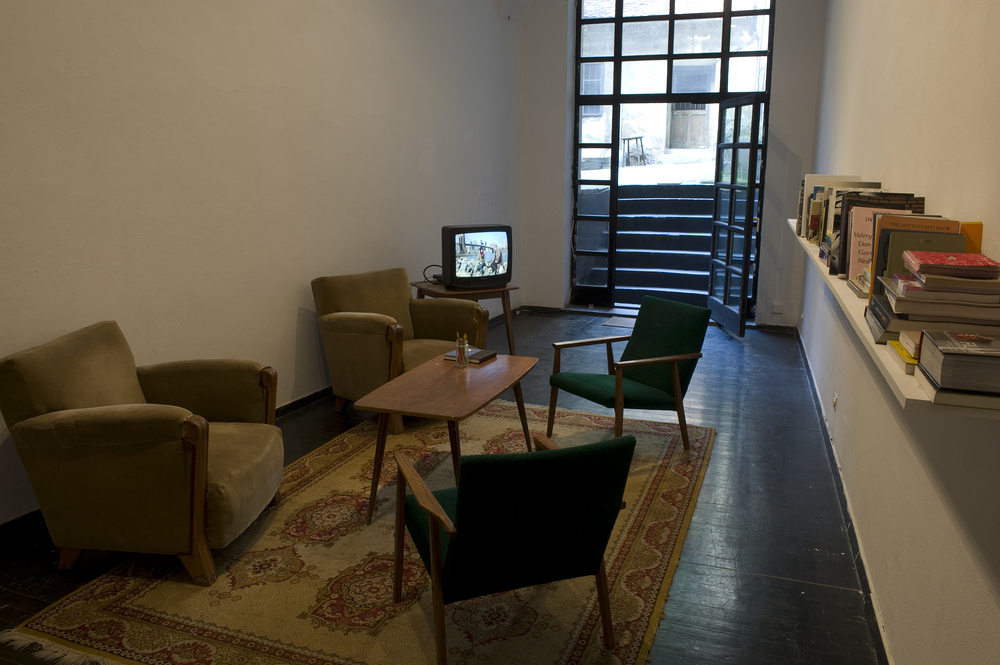
It has been almost twenty years since Zora Stančič had her first solo exhibition in Škuc Gallery. Since the distant year of 1991, she has regularly presented her work in Slovenia, with exhibitions mostly focusing on her recognisable series of linocuts. This, particularly together with the urge of the professional public to formally categorise individual artistic practices, led to Zora Stančič being labelled a graphic artist. Categorisation based on formal qualities is always problematic, as it pushes the artist as a person – and particularly their exploration of content into the background – where, as a rule, they remain. This background served as a starting point for the preparation of the current exhibition in Škuc Gallery, which formally still showcases her print work; however, it seeks to present what is usually hidden from the spectator – the process of creation of an art work. The exhibition also offers a reflection on the role of the traditional graphic arts, its connection with new media and technologies, and the accompanying new possibilities in the context of reproducibility and manipulation. Consequently, materials which are usually discarded and used only to make the final product (with Zora Stančič, this is most often a graphic image) are presented as artefacts, as “proof” of the process. These generally reveal the essence of an artistic practice. In any case, the intent of this exhibition is not to showcase the scope and variety of graphic art techniques used by Zora Stančič, but to present the personal histories which she experienced in the span of almost two decades – a kind of personal and confessional archaeology through which the artist can be recognised – her shyness, traumas, humour, sadness, vivaciousness and particularly her strong obsession with the element of the cut. The only constant which has followed her every step of the way, through every period, enabling her to fully express herself. Perhaps the constant presence of the “cut” is best described by the artist herself, when she writes in an e-mail about how the French nouvelle vague cinema strongly affected her thinking, particularly in the sense that the films may seem light-hearted, whereas in reality they follow you for years. The same effect can be traced to Zora Stančič, who is constantly and obsessively returning to the cut as some sort of moment of liberation. Every cut brings with it a narrative, be it the artist’s personal story or a story originating from the world around her – this is often the street, but always there are places where people are constantly moving together with their stories. In this case, the figure is not only the basis visual element, but also speaks from another context, seeking to convey more. The exhibition reveals more about this through the relationship of the most dominant graphic images that are also opposites in terms of form (positive–negative) and content (personal story–surroundings), on which the artist based her reflection on her art. In addition, every moment is tirelessly followed by the “cut”, which due to human nature is the never perfect element, revealing it through art. Thus the error becomes an integral, sometimes even the essential part of an art work. The cut is an act, a gesture, which cannot and should not be ignored, as this would mean ignoring oneself. In this perspective, one cannot but think of Lucio Fontana, who introduced the dimension of space into painting by slashing the canvas, thereby annihilating the ‘myth’ about the two-dimensional nature of the painting surface. The revolutionary thinking of Lucio Fontana is a strong reference for Zora Stančič, because his act made her think about the third dimension in graphic arts and the limit they entail as a genre. It should be emphasised that Zora Stančič does not mimic Fontana, nor are the gestures conceptually related, but the reference is highly significant in terms of expanding the concept of a genre and reshaping the tradition of highly codified printing techniques.
The exhibition takes the spectator through the thinking and stories following Zora Stančič. Mostly, they convey her reflection on art and how it related to different situations in life – sometimes vivacious and playful, sometimes more bitter. But the stories cut by Zora Stančič are always unrelenting and sincere, and therefore feel close to the viewer. The entirety of the art work is visually completed by short and sharp cuts, which are not visually rich; however, as a whole, they address the viewers to complete the motif based on their own on their experience. Cut.
Škuc Gallery, Ljubljana
1/6/2010 - 20/6/2010
Zora Stančič
June 1, 2010